Child Refuses Chores? Calm Scripts and Consequences
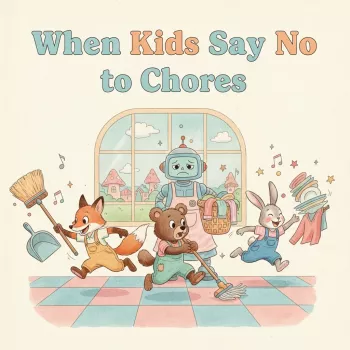
When Kids Say No to Chores: What to Do When a Child Refuses
Chore refusal is rarely just about the task. It often reflects a child’s need for autonomy, clarity, connection, or a doable plan. With a few predictable steps—calm boundaries, simple choices, and consistent follow-through—chores can become less of a daily power struggle and more of a family routine that builds competence over time.
Start With the “Why” Behind the No
Before pushing harder, pause long enough to figure out what the “no” is protecting. Many behavior blowups shrink quickly when the underlying need is addressed.
- Check for overload: Hunger, fatigue, transitions, after-school decompression, or sensory overwhelm can look like defiance.
- Look for skill gaps: Some kids don’t know how to begin, how long it should take, or what “done” looks like.
- Notice emotional needs: A child who feels disconnected may resist as a way to regain attention or control.
- Separate refusal types: Procrastination (“later”), shutdown (“can’t”), negotiation (“after this”), and power struggle (“make me”) call for different responses.
- Pick one small goal: Reduce arguing first; speed and perfection can come later.
Regulate First, Then Set the Boundary
When emotions are high, logic and lectures rarely work. Keep the message short, calm, and repeatable—so your child knows what to expect from you.
- Use a brief script: “Chores are part of being in this family. It’s time for trash.”
- Limit long explanations: Repeating the boundary once or twice is usually enough.
- Validate without removing the expectation: “You don’t want to. It’s still time to do it.”
- Reset if voices rise: A 60-second pause (water, deep breaths, step away) helps prevent escalation.
- Don’t invent consequences mid-argument: Decide them ahead of time so you can stay consistent.
Helpful, evidence-based parenting guidance is available through sources like CDC Positive Parenting Tips and the American Academy of Pediatrics (HealthyChildren.org).
Make the Task Easy to Start
Starting is often the hardest part—especially for kids who get overwhelmed by big, fuzzy instructions. Build momentum first, then aim for independence.
- Shrink the job: “Pick up 10 items” or “work for 5 minutes” often beats “clean your room.”
- Define “done”: Use a short checklist or a simple photo example (great for younger kids).
- Offer a choice that keeps the boundary: “Trash now or after shoes are put away?”
- Use a starter cue: A timer, a song, or a visual routine card reduces back-and-forth.
- Body-double when needed: Do a tiny task alongside your child for one minute to get moving.
What to Say When a Child Refuses (Scripts That Don’t Add Fuel)
The goal is fewer words, fewer negotiations, and a calm tone that doesn’t invite a debate.
Consequences That Teach (Not Just Punish)
Chores by Age: A Quick Guide to Expectations
| Age range | Chores to try | What helps it stick |
|---|---|---|
| 2–4 | Put toys in a bin, match socks, wipe spills with help | One-step instructions, make it a game, do it together for 1 minute |
| 5–7 | Set napkins, feed pets (with reminders), clear place settings | Visual checklist, consistent routine time, praise effort not speed |
| 8–10 | Make bed, sort laundry, unload light dishes, tidy room zones | Define “done,” timers, small weekly privileges tied to follow-through |
| 11–13 | Take out trash, vacuum, basic kitchen cleanup, simple meal help | Choice of when within a window, clear standards, natural consequences |
| 14+ | Laundry start-to-finish, meal prep, yard tasks, shared household projects | Collaborative planning, agreed deadlines, autonomy with accountability |
Build a Family Chore System That Prevents Daily Battles
When Refusal Is a Pattern: Signs It’s Time to Look Deeper
- Frequent shutdown, extreme distress, or explosive reactions may signal anxiety, ADHD-related initiation challenges, or sensory issues.
- If chores trigger constant conflict, review clarity, task difficulty, timing, and basics like sleep and nutrition.
- Try collaborative problem-solving when calm: “What makes this hard?” and “What would make starting easier?”
- If disrespect escalates or the household feels unsafe, consider support from a pediatrician or child therapist for tailored strategies (resources are also available via the American Psychological Association).
A Step-by-Step Plan for the Next Chore Refusal
A Printable Guide for Chore Pushback Moments
For parents who want a ready-to-use plan, When Kids Say No to Chores | Parenting Guide for What to Do When Child Refuses Chores organizes scripts, consequence ideas, and a simple “what to do next” flow for handling refusal without escalating.
For other common hot spots—especially when big feelings turn physical—Toddler Hits or Bites? Your Quick-Action Checklist! can help caregivers respond consistently in the moment.
If conflict tends to happen around off-limits areas (cleaning supplies, snacks, sharp tools), reducing temptation can also lower power struggles. Consider simple childproofing support like 10pcs Baby Safety Cabinet Locks to keep boundaries firm without constant “no’s.”
FAQ
Should chores be tied to allowance?
Keep basic “family contribution” chores separate from allowance so they don’t become a bargaining chip. If you want to teach earning, offer optional extra jobs (beyond expected chores) that can pay.
What if my child refuses and I end up doing the chore?
Reset without shame: stop rescuing, shrink the task to a first step, and use a clear when/then (like chores before screens). Add a short related consequence, then restart the routine the next day with calm consistency.
How do I handle chore refusal without yelling?
Use fewer words, a steady script, and a timer so the structure does the “heavy lifting.” If you feel yourself escalating, pause for 60 seconds, then repeat the boundary and follow through with a pre-decided consequence.














Leave a comment