Infant Food Allergy Signs & Safer First Foods Plan

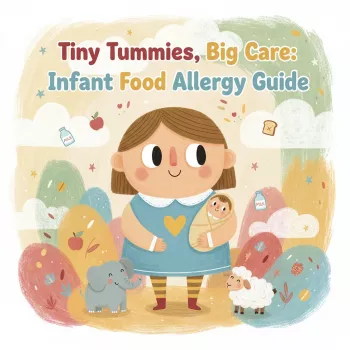
Tiny Tummies, Big Care: a calmer way to navigate infant food allergy worries
Food allergy concerns can turn early feeding into a constant guessing game—what’s normal baby stuff, what’s a warning sign, and what to do next. Tiny Tummies, Big Care: A Parent’s Guide to Navigating Infant Food Allergies (Digital Download eBook) is designed to bring structure to those stressful moments: recognizing possible reactions, preparing for safer introductions, communicating clearly with caregivers, and knowing when medical support is needed.
For clinical guidance on symptoms and care, these references can also be helpful: American Academy of Pediatrics (HealthyChildren.org) and Food Allergy Research & Education (FARE).
What makes infant food allergies feel confusing
Infants are noisy communicators. Many possible allergy symptoms overlap with everyday baby realities, which makes patterns hard to spot—especially when you’re tired and trying to do “the right thing” at every feed.
- Look-alike symptoms: spit-up, diaper rash, and fussiness are common even without allergies.
- Timing varies: reactions can be immediate or delayed, and mild or severe.
- Mixed conditions: food allergy, intolerance, reflux, eczema flares, and viral rashes can blur together.
- Decision fatigue: stress and sleep deprivation make it harder to stay objective—simple checklists and logs reduce guesswork.
Common signs to watch for during feeding and after
When introducing or re-trying foods, focus on clusters of symptoms and repeat patterns (especially if the same food keeps showing up in the story).
- Skin: hives, swelling of the lips/face, or eczema that worsens shortly after a new food.
- Digestive: repeated vomiting, diarrhea, or blood/mucus in stool (seek medical guidance promptly).
- Breathing: coughing, wheezing, noisy breathing, or trouble breathing (treat as urgent).
- Behavior: sudden lethargy, a “floppy” appearance, or inconsolable crying paired with other symptoms.
- Pattern tip: one-off symptoms happen; repeated symptoms linked to the same food matter more.
A practical approach to introducing foods when allergies are a concern
Safe, confident introductions usually come down to three things: a plan that fits your baby, simple ingredients, and a consistent observation routine. If your baby has eczema, a strong family history, or prior reactions, align your approach with your pediatrician or allergist.
- Start with a plan: match introductions to your baby’s health history and risk factors.
- One new food at a time: use age-appropriate forms and introduce when a trusted adult can watch.
- Keep it simple: fewer ingredients makes it easier to identify a trigger if symptoms show up.
- Prioritize choking prevention: avoid risky textures and follow infant feeding safety guidance.
- Build a routine: consistent observation windows and documentation reduce uncertainty.
Quick observation guide for new foods
| When to check | What to look for | What to do |
|---|---|---|
| During feeding | Hives, facial swelling, coughing, gagging beyond normal | Stop feeding, note the food and amount; seek urgent care if breathing symptoms or widespread swelling occur |
| 0–2 hours after | Vomiting, hives, wheeze, unusual sleepiness | Follow the family’s allergy action plan; contact a clinician for guidance if symptoms are concerning |
| Later that day / next day | Eczema flare, diarrhea, blood/mucus in stool, persistent rash | Document timing and symptoms; discuss patterns with a pediatrician/allergist |
What to document: the simple tracking system that helps clinicians
A good log doesn’t have to be complicated—it just has to be consistent. Clinicians can make better recommendations when they can see the “who, what, when, and how often” clearly.
- Food name and exact form: fresh, cooked, baked, or mixed into another food.
- Amount eaten: and whether it was a first exposure or a repeat exposure.
- Timing and details: minutes vs. hours; include symptom descriptions and photos when helpful.
- Possible confounders: illness, new skincare, teething, recent vaccines.
- Response to interventions: note any medication or steps taken, only as advised by a clinician.
Emergency readiness without panic
Being prepared doesn’t mean expecting the worst. It means removing friction if you ever need to act fast—especially when multiple adults feed your baby.
For families also babyproofing alongside feeding transitions, having practical safety tools on hand can reduce day-to-day scrambling—such as 10pcs Baby Safety Cabinet Locks for quick, consistent home routines.
How the eBook supports day-to-day decisions
Who this guide is best for
Getting the most value from a digital parenting resource
Related support for common toddler challenges
As feeding independence grows, big feelings can show up at meals and transitions. Pairing safety routines with gentle boundaries often keeps daily life steadier, especially when you’re already managing food-related stress. For a quick, practical plan during high-pressure moments, Toddler Hits or Bites? Your Quick-Action Checklist! (eBook Download) is a focused companion resource for families navigating escalating behavior.
FAQ
What should be done if a baby has hives or swelling after a new food?
Stop the food and document what was eaten, how much, and when symptoms started. Seek urgent medical care right away if there are any breathing symptoms, widespread swelling, repeated vomiting, or unusual lethargy; otherwise contact your pediatrician or an allergist for next steps and an action plan.
Can a baby develop an allergy if a food was tolerated before?
Yes—reactions can change over time, and new symptoms can appear after prior tolerance. Track repeat patterns and talk with a clinician, especially if eczema or other allergy risk factors are present.
Is this guide a substitute for medical advice or an allergy diagnosis?
No. It’s an educational organization tool to support safer routines and better questions for clinicians; diagnosis and treatment decisions should come from a pediatrician or allergist.














Leave a comment